Blog / History

Blog

All History Ford Bentonville Ford Dealer F-150 Arkansas Maintenance Ranger Tires Lincoln Mustang Off-Road Bronco Bentonville Ford Service Expedition Explorer McLarty Daniel Ford Service SUV Cargo Corsair Edge Henry Ford Limited Edition Transit Truck
366e5b4be3e341bba28b6bb8827c45a5

Women Pioneers in the Auto Industry

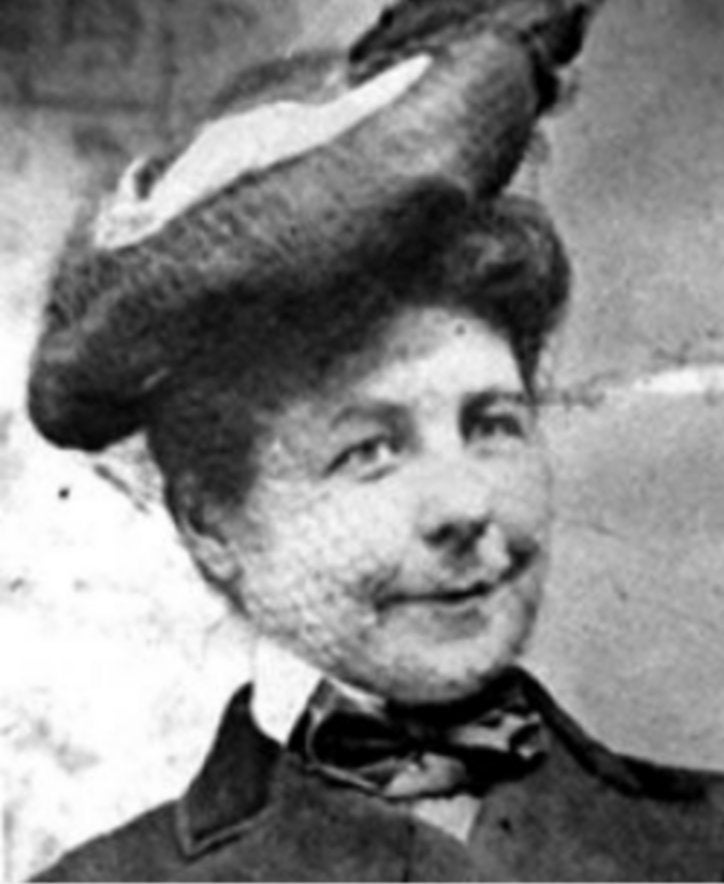
In celebration of Women's History Month, McLarty Daniel Ford Lincoln in Bentonville would like to take this moment to share the inspiring stories of a few of the women who helped shape the automotive industry, making great strides for all of us. These true pioneers have made our world a better place. Mary Anderson, (1866 – 1953) It can be brutal driving during a rainstorm or in snowy conditions. Can you imagine driving through that muck without windshield wipers?! So let's all give a big round of applause to Mary Anderson for her wonderful invention. In 1903, Mary invented the first set of windshield wipers for automobiles. The device was a lever inside the vehicle that controlled a rubber blade on the outside of the windshield. The lever, when operated, caused a spring-loaded arm to move back and forth across the windshield. A counterweight was in place to ensure contact between the wiper and the window. The device could be easily removed when not in use. Similar kinds of devices had been made earlier, but Anderson's was the first device to be effective. She prevented many car accidents and then went on dedicating her life to empowering women in every facet of the business world. Bertha Benz (1849-1944) Bertha was the wife of German inventor Carl Benz who, in 1886, created the first gasoline-powered car. Yet, Bertha Benz was a pioneer in her own right. She is the first person to take a long-distance "road trip" in a gas-engine vehicle. To prove the reliability of her husband's invention, Bertha and her sons took an early prototype of Benz's car on a then-incredible 120 mile journey in 1888. This first-ever road trip took Bertha 12 hours to complete, traveling from Mannheim to Pforzheim, Baden-Württemberg, Germany. In her honor, the Bertha Benz Memorial Route is now a historic route you can travel whenever you're in Baden-Württemberg, Germany. Denise McCluggage (1927-2015) During the early days of auto racing, nearly all race drivers were men. Denise McCluggage helped change that when she began to race professionally in the late 1950s. She eventually became the fastest American auto racing driver of any gender. As she raced she wore a white helmet with pink dots that had become her trademark. Overall, her racing achievements include winning the grand touring category at Sebring in a Ferrari 250 GT in 1961, and a class win in the Monte Carlo Rally in 1964. She also participated in the Nürburgring 1000 km sports car race. After retiring from racing in the late 1960s, McCluggage continued pioneering by becoming one of the few female automotive journalists at AutoWeek magazine. What an honor to share these stories about these courageous women. Each woman achieved not only for the automotive industry but for women's equality and making our world a much better place. When you are ready to make your own mark out on the world, let us assist you in making that happen in the vehicle that is perfect for you. Come by McLarty Daniel Ford Lincoln in Bentonville and test drive your future! Hope to see you soon! CLICK TO CONTACT THE MCLARTY DANIEL SALES TEAM
mustang2

10 Fun Facts About the 1964-1/2 Ford Mustang

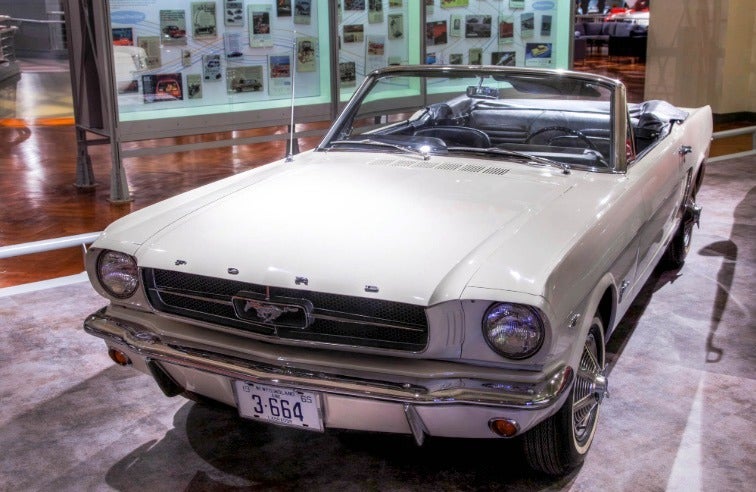
Let's take a joyride through time and explore 10 delightful facts about the 1964-1/2 Ford Mustang! From its exciting debut to its lasting charm, get ready for a fun-filled adventure into the world of this iconic American classic! 1) The origin of the Ford Mustang can be traced back to the Mustang I concept car, built by a team at Ford led by the legendary Lee Iacocca. Originally envisioned as a small, low-cost, two seat design with a rear-mounted engine, the car was being developed as a competitor to the Corvette and small, European sports cars. It debuted at the U.S. Grand Prix in Watkins Glen, New York on October 7, 1962. With racing legend Dan Gurney behind the wheel, the powerful, lightweight, well-balanced Mustang I posted lap times in line with high-end race cars of the day. 2) Ford stylist John Naijar, who helped design the Ford Mustang I concept car with fellow stylist Philip T. Clark, is credited as the person who came up with the name " Mustang." A fan of fighter plane designs from World War 2, Naijar borrowed the name from the now-iconic North American Aviation P-51 Mustang fighter plane, which had served as a quick and maneuverable bomber escort in the skies over occupied Europe. Discover the Details of the Latest Ford Mustang 3) The Mustang II concept car, which featured many of the styling and engineering details that eventually went into the first production Ford Mustang–including the familiar squared side coves, the long hood/short decklid configuration, and "2+2" four-seat arrangement–debuted at the U.S. Grand Prix in Watkins Glen, N.Y. on October 5, 1963. 4) The production Ford Mustang went on sale to the public on April 17, 1964, with Henry Ford II officially introducing the car at that year's World's Fair in Flushing Meadows, New York. 5) Because the first-year Mustang was introduced in the spring instead of in the fall, as new cars had been for years, Mustangs built before September 1964 are commonly referred to by fans of the breed as 1964-1/2 Mustangs, with cars built after being 1965 Mustangs. 6) Though Ford estimated the new Ford Mustang would sell around 100,000 examples in the first year and around 20,000 in the first few months, the car was an immediate, massive success, topping 100,000 in sales only three months after the launch. The Mustang would go on to sell 318,000 units in the first year, and would surpass more than one million in sales within eighteen months. 7) Originally, the only Mustang variants were the coupe and convertible models. The famous Mustang Fastback, with a sloped rear roof that has been recreated in late model Mustangs–including the 2019 and 2020 Mustang coupe–wouldn't be introduced until 1965. 8) The 1964-1/2 Mustang convertible bearing serial number 00001 was sold to Canadian airline pilot Stanley Tucker at a Ford dealership in St. John's Newfoundland on April 16, 1964–the day before the car was supposed to officially go on sale. Soon realizing how significant and important the first Mustang would be, Ford Motor Company eventually tracked down Tucker and made a deal to trade Mustang 00001 for the 10,000,001st Mustang, which would be built to Tucker's specifications. He eventually settled on a Mustang convertible with every available option except for the high-performance 289 cubic inch engine (which Tucker declined because the engine's warranty wasn't as good as the standard 289). 9) Ford Motor Company donated Mustang 00001 to Dearborn's Henry Ford Museum, where it remains to this day. As for the Mustang #10000001, Stanley Tucker used it as a daily driver for many years and sold it to his mechanic in the mid-1970s. Soon thereafter, it dropped off the map, and is considered one of the great "lost" Mustangs. 10 Interesting Facts About the Life of Henry Ford 10) Though many mistakenly assume that the white Ford Mustang convertible that appears in the 1964 James Bond film "Goldfinger" was the first appearance of a Mustang on the silver screen, the actual first Mustang ever to appear in a feature film was a red Mustang convertible that co-starred in the French comedy Le Gendarme de Saint-Tropez. "Goldfinger" debuted on September 17, 1964, while the French film first screened a little over a week earlier, on September 9, 1964. Exploring these 10 fun facts has truly been a thrilling ride through the history of the 1964-1/2 Ford Mustang! From its innovative features to its cultural impact, this iconic car continues to captivate enthusiasts worldwide. As we conclude our journey, let's celebrate the enduring legacy of the Mustang and the joy it brings to generations of fans.

ford1919

10 Interesting Facts About the Life of Henry Ford

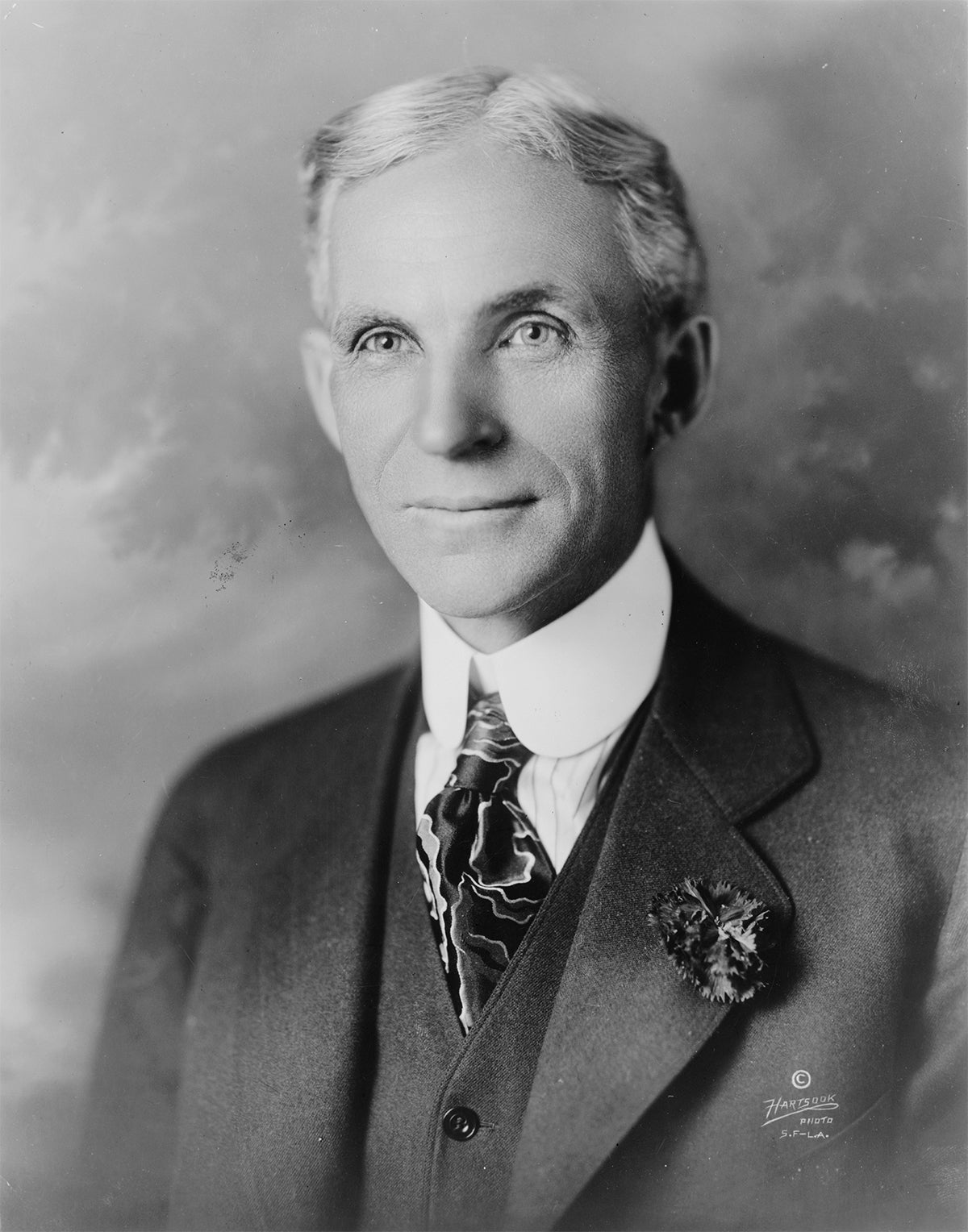
While you can't miss the famous Ford Blue Oval logo outside McLarty Daniel Ford of Bentonville, how much do you really know about the man who started it all? Read on for 10 fun facts about Henry Ford–inventor, innovator, entrepreneur and all-around American genius! 1) Henry Ford made extra money as a pocketwatch repairman when he was in his early teens. A mechanical genius from a young age, Ford taught himself the craft of watch repair by repeatedly taking apart and putting back together a pocketwatch given to him by his father. He even made his own tools to work on watches, including tiny screwdrivers he laboriously filed from old nails, and tweezers made from the spring steel "bones" from a discarded corset. 2) When he was only 20 years old, Ford was promoted to Chief Engineer of the Thomas Edison Illumination Company's main electrical plant in Detroit, which provided electrical power for the city. He worked there for six years before Edison himself encouraged Ford to follow his dreams of creating an affordable, reliable, gasoline-powered automobile. Learn More About the Ford Mustang 3) Among many, many other innovations Henry Ford brought to his manufacturing plants was a willingness to hire handicapped people, including the blind, deaf and those who had lost limbs in combat or in accidents. By 1919, more than 20 percent of Ford Motor Company's workforce had some form of disability. 4) After being convinced he should seek a life in politics by his friend President Woodrow Wilson, Ford ran for a seat in the United States Senate in 1918. He only lost by 4,500 votes, even though he didn't spend a dime on his campaign. 5) Henry Ford was America's second billionaire, after oil magnate John D Rockefeller. 6) Still an innovator well into old age, Henry Ford debuted a prototype of a plastic-bodied car in August 1941. Even more amazing, the car's body was biodegradable, with the lightweight panels made entirely from soybeans. While Ford hoped to include the soybean panels in production Ford cars and trucks to lighten weight and lessen the cost of new vehicles, the outbreak of World War II sidelined the project. 10 fun facts about the 1964-1/2 Ford Mustang 7) One of the stranger objects on display at the Henry Ford Museum in Dearborn, Michigan is a vial containing the last breath of Ford's idol and former employer Thomas Edison. As the great inventor was dying, Ford convinced Edison's son to sit beside Edison's bed a glass test-tube, then capture his last breath and seal the tube with a cork. 8) Among Ford's many inventions over the years is a summertime staple: the compressed charcoal briquette. With Ford plants turning out the Model T, which featured many parts made of oak, Ford found himself awash in wood scraps. Ford's Brother-In-Law E.G. Kingsford suggested they create a charcoal manufacturing plant, and Ford named the product Kingsford Charcoal in his honor, with Kingsford still being a top producer of briquettes to this day. Talk about some cool Henry Ford facts! 9) During World War I, Ford took to the skies when he founded the Ford Airplane Company. While the company didn't achieve the success Ford had hoped, it did create the sturdy and now-iconic Ford Tri-Motor airplane, which was produced between 1928 and 1933. A Ford Tri-Motor even appears in "Indiana Jones and the Temple of Doom." 10) Ford designed and built his first operational steam engine in 1878, when he was only 15 years old! As we wrap up these interesting facts about Henry Ford, it's like uncovering hidden treasures! His story is full of fascinating twists and turns, showing us the power of determination and innovation. Let's carry these facts about Henry Ford with us as we forge ahead, inspired by his incredible journey.

Contact Us

Fill out this form below and we'll contact you shortly
*Required Fields