


Ford fans will have plenty to cheer about this November when, after years of false starts and production issues, the epic film “Ford vs. Ferrari” is finally scheduled to debut in theatres! Featuring an all-star cast that includes box office stars Matt Damon and Christian Bale, the film follows the quest by Ford Motor Company and legendary race car developer Carroll Shelby to design, develop and build from scratch the iconic Ford GT40 race car, with a goal of ending Ferrari’s dominance of the annual 24 Hours of Le Mans road race in France.
Damon will portray Carroll Shelby, while Bale will portray Ford racing test driver Ken Miles.
As seen in previews of “Ford vs. Ferrari” that have already been released, the temperamental Shelby butted heads with the button-downed culture at Ford during the development of the GT40, including epic arguments with CEO Henry Ford II, as Shelby’s eccentric team of misfits and gearheads worked on a tight deadline to build what is still considered to be one of the greatest race cars of all time. Examples of the now-iconic 1966 GT40 have since sold at auction for more than $10 million dollars. Spoiler alert: The Ford GT40 would not only best Ferrari by winning Le Mans in 1966 — the first time an American-built car had won a major European race since 1921 — but would go on to win Le Mans four years running between 1966 and 1969.
“Ford vs. Ferrari,” which is scheduled to debut on November 15, is directed by James Mangold, who previously helmed Hollywood hits including “Girl, Interrupted,” “3:10 to Yuma” and the Johnny Cash biopic “Walk the Line.” The film is based on A.J. Baime’s book “Go Like Hell: Ford, Ferrari, and Their Battle for Speed.” A previous deal that would have seen Brad Pitt star as Shelby with Tom Cruise as Ken Miles fell through, putting the project in jeopardy until Mangold signed on, followed by Damon and Bale.
Production on the film started in July 2018, with shooting on location in California, New Orleans, Georgia and Le Mans, France. Walt Disney Pictures is producing “Ford vs. Ferrari,” with a budget of $100 million dollars.
We here at McLarty Daniel Ford are stoked to get our first peek at “Ford vs. Ferrari” when the trailer drops in coming weeks, and if you’re a fan of the Blue Oval brand, we know you are too. If you want to own your own piece of legendary Ford Performance, stop in today at McLarty Daniel Ford and check out the 2019 Ford Mustang Shelby GT500, 2019 Ford Edge GT, or the incredible 2019 Ford F-150 Raptor! Or you can shop our big selection of hot Ford vehicles online right now!
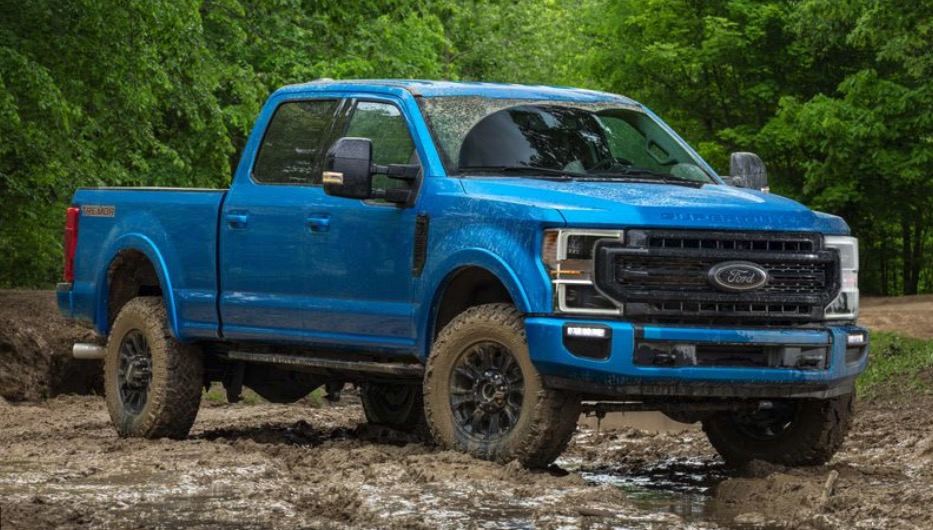
Ford’s Super Duty trucks have long been legendary for their heavy-duty hauling and towing abilities. Now the Blue Oval plans to make the 2020 Super Duty just as synonymous with getting up to some heavy-duty off-roading and rock crawling, with the all-new 2020 Ford Super Duty Tremor! A special-edition package for the 2020 Ford Super Duty, the Tremor package looks to beat the 2019 Ram Power Wagon at its own off-road game with a factory lift, bigger tires, bigger engine options, more suspension travel, and some high-tech assistance under the hood. When the Super Duty Tremor hits dealer lots this fall, it will be the most capable Super Duty ever made.
“A growing number of Super Duty customers use their trucks for more than work,” said Ford Truck Marketing Manager Todd Eckert. “They’re fishing, camping and towing boats on weekends and they go off-road, so we designed this truck specifically for them – more ground clearance, bigger shocks, bigger tires and more off-road capability, Tremor balances what customers demand in terms of work with what they need in the great outdoors.”
Available on XLT, Lariat, King Ranch and Platinum trim group 4×4 F-250 and F-350 Super Duty trucks with single rear-wheel axles and the 6.75-foot bed, the Tremor package will come standard with either the legendary third-gen 6.7-liter Power Stroke turbodiesel, or Ford’s massive, all new 7.3-liter gas V8. Upgrades included with the Tremor package include a two inch factory lift, giant 35-inch Goodyear Wrangler Duratrac tires — the biggest tires available on any heavy-duty truck — and model-specific alloy wheels in a signature matte-black finish. The result is a burly 10.8 inches of ground clearance, for exceptional crawling over rocks and obstacles, with an approach angle of 31.6 degrees and the ability to ford water up to 33 inches deep.
Out back, progressive-rate springs allow the Tremor to retain the Super Duty’s massive towing and hauling, while also allowing for more suspension travel over uneven ground. The rear stabilizer bar has been turned to work with the increased suspension articulation without compromising safety or ride quality, while custom 1.7-inch twin-tube dampers soak up the bumps. A locking rear differential, limited slip front diff by legendary supplier Dana and electronic shift-on-the-fly transfer case put the power to the ground, with added traction thanks to a system that can sense when a tire has lost grip and automatically sends power to the wheels with the most bite.
A full set of heavy steel skid plates keeps crucial components intact and happy, while selectable drive modes optimize engine and drivetrain systems for any occasion, including eco for enhanced fuel economy, tow/haul, snow/sand, normal driving and a Tremor-exclusive rock-crawling mode that optimizes the truck for low and slow maneuvering over slick rock surfaces.
Everybody here at McLarty Daniel Ford of Bentonville was already excited to get the redesigned 2020 Ford Super Duty on the lot here this fall, and the word that Ford will also be introducing the Tremor package is just the icing on the cake. Want to be one of the first in Northwest Arkansas to get the keys to a new 2020 Ford Super Duty Tremor? Then stop in at McLarty Daniel Ford, talk to one of our friendly finance professionals, and get pre-approved today!
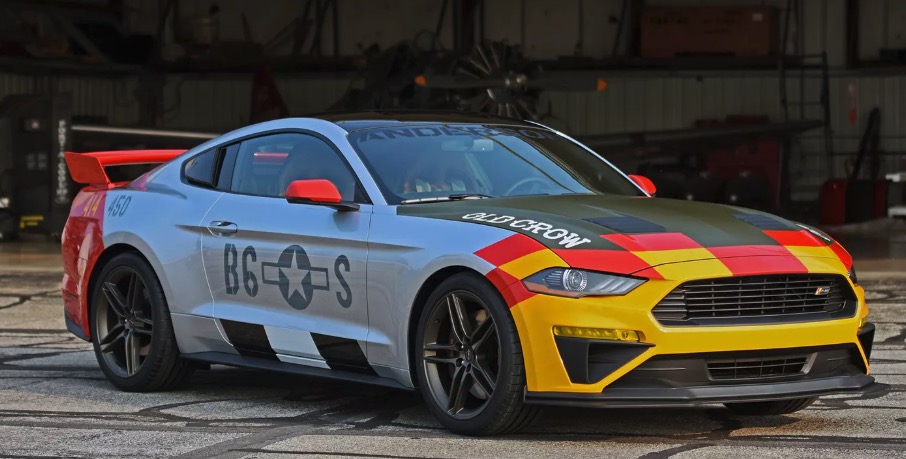
The sacrifices of the generation of Americans who fought and won the Second World War are immeasurable. Now Ford Motor Company is honoring one of the greatest of the Greatest Generation with the debut a 2019 Ford Mustang GT built to honor a celebrated fighter pilot who risked it all for freedom in the skies over Europe. The car will be auctioned this month, with proceeds benefiting a charity that helps young people learn the joys of flying.
Dubbed The Old Crow Mustang, the custom 2019 Ford Mustang GT honors the service of fighter pilot Col. Bud Anderson, who flew a P-51 Mustang fighter plane he named “Old Crow.” Anderson, who turned 97 years old years old in January, flew 116 combat missions during WW2, including a marathon six-hours over hostile territory while protecting ground troops storming the beaches of Normandy on D-Day. One of the few American pilots to achieve the status of “triple ace,” Anderson racked up incredible 16 victories in the air, while somehow miraculously never having his plane struck by enemy fire during a dogfight. He was awarded over 25 medals for his bravery during his military career, including the Distinguished Flying Cross.
Meet the Mustang: Celebrating the Legacy of Ford’s Iconic Sports Car
The Old Crow Mustang GT features a take on the same paint scheme that graced Anderson’s P-51 during World War 2, including an Eighth Air Force badge on the decklid. Custom wheels put the power to the ground, while the carbon-fiber rear spoiler from the 2020 Ford Mustang Shelby GT500 brings up the rear. Inside, the upholstery is a similar tribute to military service, featuring custom Army green leather and canvas, a red shifter knob, red door handles, and P-51 badging on the dashboard.
The Mystery of Jim Morrison’s ‘Blue Lady’ Mustang
The Old Crow Mustang has the skills to pay the bills under the hood as well, thanks to a Roush Performance Supercharger that helps the 5.0-liter V8 crank out 710 horsepower and 610 lb.-ft of torque, plus a cold air intake, Ford Performance exhaust, and more go-fast goodies.
The car was auctioned off on July 25 at the EAA AirVenture show in Oshkosh, Wisconsin for $400,000. The EAA AirVenture show is a flying convention that attracts more than 600,000 people per year. Ford has built and donated 11 vehicles to the event for charity auction over the years, helping the EAA raise more than $3.5 million for youth flying. At last year’s event, a custom Ford Mustang that paid homage to the famous Eagle Squadron sold for an incredible $420,000, and back in 2017, a Ford F-150 Raptor pickup designed to evoke the F-22 Raptor fighter jet sold for $300,000.
Here at McLarty Daniel Ford of Bentonville, we’re proud of the sacrifices of our veterans have made to keep us safe and free, and we’re proud to sell the Ford Brand. Let us show you our pride, and help you get behind the wheel of your own Mustang street fighter today!
Since the original Ford GT40 ended decades of Ferrari dominance at the 24 Hours of Le Mans road race in 1966, the Ford GT has been an icon of speed. That reputation was only enhanced in recent years with the introduction of the limited edition Ford GT supercar.
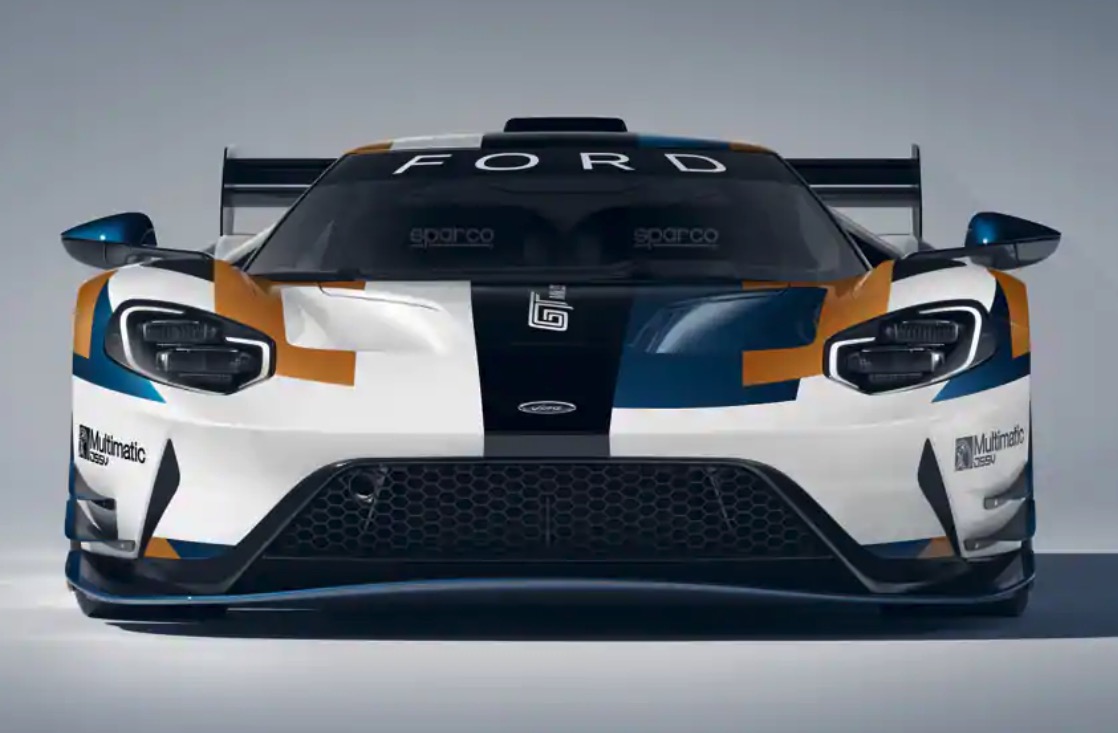
Now, Ford and partner Multimatic have upped the ante again with the Ford GT Mk II. Billed as the ultimate expression of Ford Performance, without the artificial restrictions placed on race-built Ford GT models by race series rules, the track-only limited edition Ford GT Mk II is sure to go down as another instant classic by Ford.
“The GT Mk II unleashes the full performance potential of the Ford GT without any artificial performance limitations dictated by racing sanctioning bodies,” said Hau Thai-Tang, Ford chief product development and purchasing officer. “It’s the closest GT owners can get to the Le Mans-winning performance and exhilarating feeling of crossing the finish line in the Ford GT race car.”
Ford and Multimatic — the company that constructs the Ford GT by hand — have limited the production run of the Ford GT Mk II to just 45 units, each with a starting price of a whopping $1.2 million.
Upgrades include aerodynamic and downforce improvements that generate up to 400 percent more downforce than the standard GT. Along with weight savings and chassis upgrades, that allow the Ford GT Mk II to hug the skidpad at up to 2Gs. Under the hood is an enhanced version of Ford’s EcoBoost 3.5-liter V6 delivering 700 horsepower — 200 more than the highest-horsepower Ford GT race car is allowed to have because of race series rules — thanks to high-tech goodies like a spedial air-to-air outboard mounted charge air cooler with a water sprayer that automatically engages during high temperature conditions to supercool the air intake charge. A roof-mounted intake delivers cool air to the engine, clutch and transmission coolers, for sustained, high-speed duty without overheating.
Helping bring all those big ponies to a halt are high-tech carbon ceramic brakes, with 15.5-inch front discs and 14.1-inch discs in the rear, plus custom calipers by Brembo. Unique forged aluminum 19-inch wheels put the power down thanks to Michelin Pilot Sport GT tires.
“The true off-the-hook performance capability of the GT hasn’t yet been fully showcased,” said Multimatic’s Chief Technical Officer, Larry Holt. “The road car is obviously limited by the many global homologation requirements that it must comply with, and the race car suffers from the restriction of the dreaded Balance of Performance, resulting in it being 150 horsepower down to the road car. The Mk II answers the regularly asked question of how would the car perform with all the limitations lifted: the answer is spectacularly.”
While you might not have $1,2 million laying around to spend on a new Ford GT Mk II, that doesn’t mean you can’t get in on the Ford Performance fun! Stop in today at McLarty Daniel Ford of Bentonville and check out our full lineup of Ford performance cars, including the incredible Ford Mustang, today!
The all-new 2020 Ford Police Interceptor Utility takes policing to the next level | McLarty Daniel Ford

Since soon after the dawn of the automobile, Ford Motor Company has been supplying police departments with vehicles that can survive the rigors of life on the beat, from the rumbling Model T, to the powerful Ford Crown Victoria that became synonymous with police work in the 1990s, to today’s generation of high-tech Ford police cruisers. That said, the latest police-oriented offering from the Blue Oval might be their best and most duty-ready yet: the incredible 2020 Ford Police Interceptor Utility.
Packed with technology to make it easier on the taxpayers’ pocketbook and features to make police work safer than ever for America’s bravest, you might not want to see the 2020 Ford Police Interceptor Utility in your rearview mirror, but you’ll be glad it’s out there helping keep our communities, and our police officers, safe.
Building on the great styling of the next generation Ford Explorer, the 2020 Ford Police Interceptor Utility is engineered from the ground up with police departments and real-world officer needs in mind. Recognizing that municipalities face tighter budgets these days, the 2020 Ford Police Interceptor features a standard, fuel-sipping hybrid powertrain that uses a combination of gas and electric power while still delivering the horsepower and speed officers need in an emergency. Police cruisers spend a lot of time idling on the job, and that used to mean wasted fuel. With the hybrid powertrain, electric equipment like lights, on-board computers and more can by powered through the vehicle’s lithium-ion battery, with the gasoline engine starting automatically to periodically recharge the system. That results in fewer fill-ups, and reduced CO2 emissions to help the environment.
For those jobs where only a high-horsepower drivetrain will do, the 2020 Ford Police Interceptor Utility is also available with the turbocharged 3.0-Liter EcoBoost V6, delivering a whopping 400 horsepower and 415 pound-feet of torque, to get cops moving when an emergency or pursuit situation arises.
Police work also means high-speed driving, often in challenging weather conditions or congested city traffic. The 2020 Ford Police Interceptor Utility has you covered there, too, with a standard all-wheel drive powertrain that provides sure-footed handling and stability even at high speeds or slick conditions. The 2020 Ford Police Interceptor also features a high-strength passenger compartment that’s engineered to withstand an incredible 75 mile per hour rear impact crash, along with the added security of Ford’s Side Protection and Cabin Enhancement (SPACE) Architecture, which reinforces the cabin to help protect officers in the event of a collision.
In addition, the 2020 Ford Police Interceptor Utility features a host of standard, police-friendly tech, including standard hands-free Bluetooth calling and a rear view camera that can be activated at the push of a button, even when the vehicle is parked. Keeping a watchful eye over those who watch out for us, the 2020 Police Interceptor Utility also features the cutting edge Police Perimeter Alert, a system which utilizes sensors around the vehicle to monitor the back and sides for movement, instantly analyzing motion to warn officers of a potential sneak attack from the side or rear. When a threat is detected, the system sounds audio and visual alerts, activates the rear view camera, and automatically rolls up the windows and locks the doors. Every 2020 Ford Police Interceptor Utility also comes with two years of Ford Telematics, Ford’s powerful fleet management software that can remotely keep track of maintenance schedules, driver behavior and more, to optimize annual operational costs.
Police work is always evolving to meet the efforts of criminals and scofflaws, and the 2020 Ford Police Interceptor Utility has evolved to meet the challenge. Packed with real world tech and protection, it’s the next big thing for the thin blue line from Ford.
June 6, 2019 marked the 75th Anniversary of the D-Day Landings in Normandy, France, and we here at McLarty Daniel Ford of Bentonville found ourselves awed by the coverage of the event, with thousands of military families, re-enactors, active duty military, world leaders and the few remaining D-Day combat veterans — all in their 90s now — turning out for the event.
We’re proud of our veterans, and especially proud of the vets on staff here at McLarty Daniel Ford. Another thing we’re proud of is the long list of ways the Ford Motor Company has helped America’s soldiers over the years, including engineering and building dozens of different Ford military vehicles. Seen below, check out our list of our four favorite military vehicles produced by Ford since World War I. And when you’re ready to continue or start building your own history with Ford, stop in today at McLarty Daniel Ford of Bentonville, or check out our full lineup right now online.
1912-1918 Ford Model T Ambulance: World War I was an entirely different kind of war, built on industrialization and engineering and packed with resulting horrors because of it, from the flying bomber to the tank, mustard gas to the machine gun. Long before America entered the war, Ford Model T trucks, renowned for their ruggedness, simplicity and easy repairs, were being pressed into service as ambulances and troop carriers. Weighing only 1,300 pounds, the light weight of the Model T truck allowed it to glide over muddy roads that would sink a heavier vehicle, and it could even be lifted and carried over obstacles by as few as a dozen men. By the end of the war, over 4,000 Ford Model T Ambulances had seen duty in Europe.
Ford Model M1918 Two-Man Tank: Once America entered World War I in April 1917, the might of the United States’ industrial capacity soon turned to building vehicles for the war effort. That included the young Ford Motor Company, which received a contract from the U.S. Government to design and build a small, two-man tank. Ford came up with the Ford 3-Ton M1918 Tank. Armed with a single M1919 Browning Machine Gun, the tank was powered by twin Model T Ford engines delivering 45 horsepower and a maximum speed of 8 miles per hour. Just 14 feet long, the M1918 barely had enough room inside for a driver and a gunner, who contended with smoky, hot, torturous conditions. Though the original Army contract called for the construction of 15,000 M1918 Tanks, the war ended before Ford could really gear up production, and only 15 were completed.
1942-43 Ford GPA Amphibious Jeep: Rivers, lakes, oceans and even fast-flowing streams are always a considerable obstacle for troops on the move, and after seeing the success of small Ford and Willys Jeeps in combat during World War II, the Army wanted a quick combat runabout that didn’t have to stop at the water’s edge. The result was the Ford GPA Amphibious Jeep. Called a “Seep” by soldiers, the GPA was an ungainly looking vehicle on land, with a wheelbase of just 84 inches, a boat like hull, and an engine-powered prop and rudder in the rear to help it navigate deep water. Slower than the standard Jeep thanks to a weight of 3,500 pounds, the GPA also sat low in the water, making it difficult to use in choppy seas. Nevertheless, over 12,500 Ford GPAs were built and shipped to both the Pacific and Europe.
Ford M151 “Quarter-Ton” 4×4: Though Korea and Vietnam represented a very different kind of warfare than the combat seen in World War II, the U.S. Military needed a successor to the Willys Jeeps that had seen duty in Europe and the Pacific. In 1951, Ford Motor Company was awarded the contract to design and build the vehicle, and the result was the M151. Just 85 inches long, with a “tub” design similar to the Willys Jeeps from WW2, the M151 utilized an integrated frame that eliminated welded frame members. Underneath, it employed independent suspension and coil springs, for high-speed maneuverability and stability even over rugged terrain. The grille, however, was a departure from the Willys look, with six horizontal slots. Tens of thousands of M151s saw duty in Vietnam. Eventually built by Ford, Kaiser and AM General, over 100,000 M151s were produced between 1959 and the end of production in 1988.
10 Fun Facts About the 1964-1/2 Ford Mustang

Let’s take a joyride through time and explore 10 delightful facts about the 1964-1/2 Ford Mustang! From its exciting debut to its lasting charm, get ready for a fun-filled adventure into the world of this iconic American classic!
1) The origin of the Ford Mustang can be traced back to the Mustang I concept car, built by a team at Ford led by the legendary Lee Iacocca. Originally envisioned as a small, low-cost, two seat design with a rear-mounted engine, the car was being developed as a competitor to the Corvette and small, European sports cars. It debuted at the U.S. Grand Prix in Watkins Glen, New York on October 7, 1962. With racing legend Dan Gurney behind the wheel, the powerful, lightweight, well-balanced Mustang I posted lap times in line with high-end race cars of the day.
2) Ford stylist John Naijar, who helped design the Ford Mustang I concept car with fellow stylist Philip T. Clark, is credited as the person who came up with the name “Mustang.” A fan of fighter plane designs from World War 2, Naijar borrowed the name from the now-iconic North American Aviation P-51 Mustang fighter plane, which had served as a quick and maneuverable bomber escort in the skies over occupied Europe.
Discover the Details of the Latest Ford Mustang
3) The Mustang II concept car, which featured many of the styling and engineering details that eventually went into the first production Ford Mustang–including the familiar squared side coves, the long hood/short decklid configuration, and “2+2” four-seat arrangement–debuted at the U.S. Grand Prix in Watkins Glen, N.Y. on October 5, 1963.
4) The production Ford Mustang went on sale to the public on April 17, 1964, with Henry Ford II officially introducing the car at that year’s World’s Fair in Flushing Meadows, New York.
5) Because the first-year Mustang was introduced in the spring instead of in the fall, as new cars had been for years, Mustangs built before September 1964 are commonly referred to by fans of the breed as 1964-1/2 Mustangs, with cars built after being 1965 Mustangs.
6) Though Ford estimated the new Ford Mustang would sell around 100,000 examples in the first year and around 20,000 in the first few months, the car was an immediate, massive success, topping 100,000 in sales only three months after the launch. The Mustang would go on to sell 318,000 units in the first year, and would surpass more than one million in sales within eighteen months.
7) Originally, the only Mustang variants were the coupe and convertible models. The famous Mustang Fastback, with a sloped rear roof that has been recreated in late model Mustangs–including the 2019 and 2020 Mustang coupe–wouldn’t be introduced until 1965.
8) The 1964-1/2 Mustang convertible bearing serial number 00001 was sold to Canadian airline pilot Stanley Tucker at a Ford dealership in St. John’s Newfoundland on April 16, 1964–the day before the car was supposed to officially go on sale. Soon realizing how significant and important the first Mustang would be, Ford Motor Company eventually tracked down Tucker and made a deal to trade Mustang 00001 for the 10,000,001st Mustang, which would be built to Tucker’s specifications. He eventually settled on a Mustang convertible with every available option except for the high-performance 289 cubic inch engine (which Tucker declined because the engine’s warranty wasn’t as good as the standard 289).
9) Ford Motor Company donated Mustang 00001 to Dearborn’s Henry Ford Museum, where it remains to this day. As for the Mustang #10000001, Stanley Tucker used it as a daily driver for many years and sold it to his mechanic in the mid-1970s. Soon thereafter, it dropped off the map, and is considered one of the great “lost” Mustangs.
10 Interesting Facts About the Life of Henry Ford
10) Though many mistakenly assume that the white Ford Mustang convertible that appears in the 1964 James Bond film “Goldfinger” was the first appearance of a Mustang on the silver screen, the actual first Mustang ever to appear in a feature film was a red Mustang convertible that co-starred in the French comedy Le Gendarme de Saint-Tropez. “Goldfinger” debuted on September 17, 1964, while the French film first screened a little over a week earlier, on September 9, 1964.
Exploring these 10 fun facts has truly been a thrilling ride through the history of the 1964-1/2 Ford Mustang! From its innovative features to its cultural impact, this iconic car continues to captivate enthusiasts worldwide. As we conclude our journey, let’s celebrate the enduring legacy of the Mustang and the joy it brings to generations of fans.

The gravity of how much plastic we use on a daily basis might not register until you put it like this: with the exception of the tiny fraction of plastics that are made to be biodegradable, every plastic item you’ve ever used in your life still exists somewhere in the world. Every plastic toy you had as a kid. Every cheese wrapper. Every plastic straw, fork and spoon. Every plastic button, widget and whatsit. It’s all still out there somewhere, and what hasn’t been recycled is likely in a landfill or floating in an ocean, lake or river, where it might remain pretty much unchanged until your grandchildrens’ grandchildrens’ grandchildren are your age.
One company that has stepped up in a big way to push back against the mountains of plastic waste our world produces is Ford Motor Company. You know all those plastic water bottles you’ve drank from and tossed into the recycling bin over the years? There’s a good chance at least a few of them have made it into a Ford car, truck, van or SUV. In 2019, Ford vehicles will utilize the recycled plastic from over 1.2 BILLION plastic bottles — up to 250 bottles per vehicle produced — to build underbody shields and wheel liners for every Ford car, truck and SUV that rolls off the assembly line. Crucial for reducing road noise and helping create an aerodynamically slippery underbody to improve fuel economy, the recycled shields are just one way Ford is working to reduce, reuse and recycle.
“The underbody shield is a large part, and for a part that big, if we use solid plastic, it would likely weigh three times as much,” said Thomas Sweder, design engineer, Ford Motor Company. “We look for the most durable and highest performing materials to work with to make our parts, and in this case, we are also creating many environmental benefits.”
Due to its light weight, recycled plastic from plastic bottles is perfect for the manufacture of underbody shields, engine under shields and front and rear wheel arch liners. When the vehicle reaches the end of its useful life, these parts and pieces can then themselves be recycled, helping to prevent the need for creating new plastic pieces.
“Ford is among the leaders when it comes to using recycled materials such as this, and we do it because it makes sense technically and economically as much as it makes sense for the environment,” Sweder said. “This material meets all of our robust specifications for durability and performance.”
Those 1.2 billion bottles will never wind up in a landfill or in the ocean, where the Pacific Gyre — a mass of floating plastic refuse bigger than the land area of Mexico — has been clustered together, harming wildlife and fish. It’s one more reason McLarty Daniel Ford of Bentonville is proud of the brands we sell, and Ford’s commitment to our shared future.
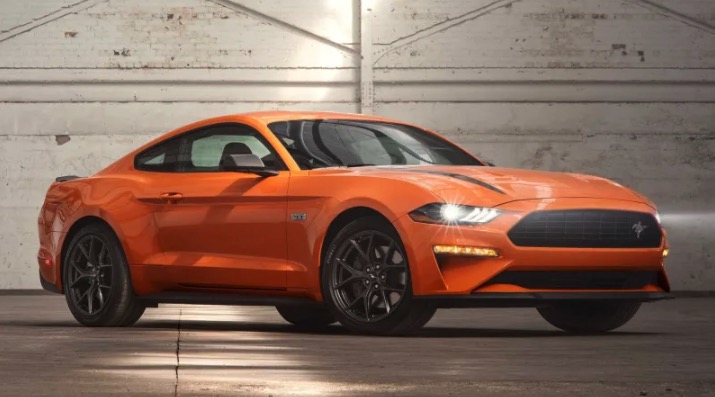
Hot on the heels of the news that the 2019 Ford Mustang is the top-selling sports coupe in the world for the fourth straight year, Ford is upping the ante with the announcement of the 2020 Mustang’s all-new 2.3-Liter High Performance Package, which features aerodynamic, suspension, braking and engine upgrades to boost the performance of the 2.3-Liter EcoBoost Mustang to 330 horsepower and 350 lb.-ft of torque. The package will make the 2020 Mustang with the 2.3-liter four cylinder the hottest four-cylinder Mustang Ford has ever built.
Innovation never stops in the testing labs and workshops at Ford Motor Company. The 2.3-Liter High Performance Package is the latest product of that spirit of innovation. The initial idea for the package began when engineers borrowed the tight-winding 2.3-Liter turbo four engine from the Ford Focus RS.
“The Ford Performance Focus RS 2.3-liter engine is a high-revving marvel,” said Mustang Chief Engineer Carl Widmann. “Anyone who’s driven this EcoBoost engine instantly loves how quickly it responds and delivers power. When our team got the chance to try this specially built engine in a Mustang, we immediately agreed, ‘We have to do this.'”
The team managed to bring the package from concept to production-ready package in under 10 months. It will be available in the base-model Mustang EcoBoost fastback coupe or convertible in Fall 2019.
The engine was designed in conjunction with Ford Performance, and features an alloy block and freer-breathing cylinder head, plus a 63 millimeter twin-scroll turbocharger that pushes five percent more boost than the standard EcoBoost four. The engine will be backed by either Ford’s 10 speed SelectShift automatic transmission, or the six-speed manual. Testing of the package is ongoing, but the numbers are promising, including zero-to-60 times in the mid-four-second range, and a top speed of 155 miles per hour — 34 miles per hour faster than the base EcoBoost Mustang — while still delivering world-class fuel economy.
“It’s not just the horsepower gains over the standard 2.3-liter EcoBoost,” said Widmann, “it’s the broader torque curve that delivers 90 percent of peak torque between 2,500 and 5,300 rpm, which is 40 percent wider than the base EcoBoost engine. Plus, horsepower holds stronger up to the 6,500-rpm redline – enabling more usable power and torque for enthusiasts and weekend autocrossers to enjoy.”
On the suspension and handling side, the new 2020 2.3L High Performance Package f will include an aluminum strut tower to stiffen the chassis, along with larger four-piston brake calipers and 13.9-inch front rotors from the 2020 Mustang GT. Out back, a limited-slip rear axle is geared at 3:55:1 for great power coming out of corners, while the ponies are put to the ground via model-specific 19-inch machined-face allow wheels.
Externally, the 2020 Mustang High Performance Package includes a large front splitter and belly pan for increased aerodynamic efficiency, brake cooling ramps from the Mustang GT, a blacked-out grille, 2.3L High Performance Package side badges and a raised blade rear spoiler. Inside, you get an engine-turned alloy instrument panel for an old-school racer vibe, with oil pressure and turbo boost gauges, and a numbered dash plaque.
Does all this get you in the mood to get your hands on a Mustang? If so, stop in today at McLarty Daniel Ford, where our selection of Ford Mustangs is second to none. Or you can check out our full lineup of Ford Performance cars online right now!
Lincoln debuts the all-new 2020 Lincoln Corsair
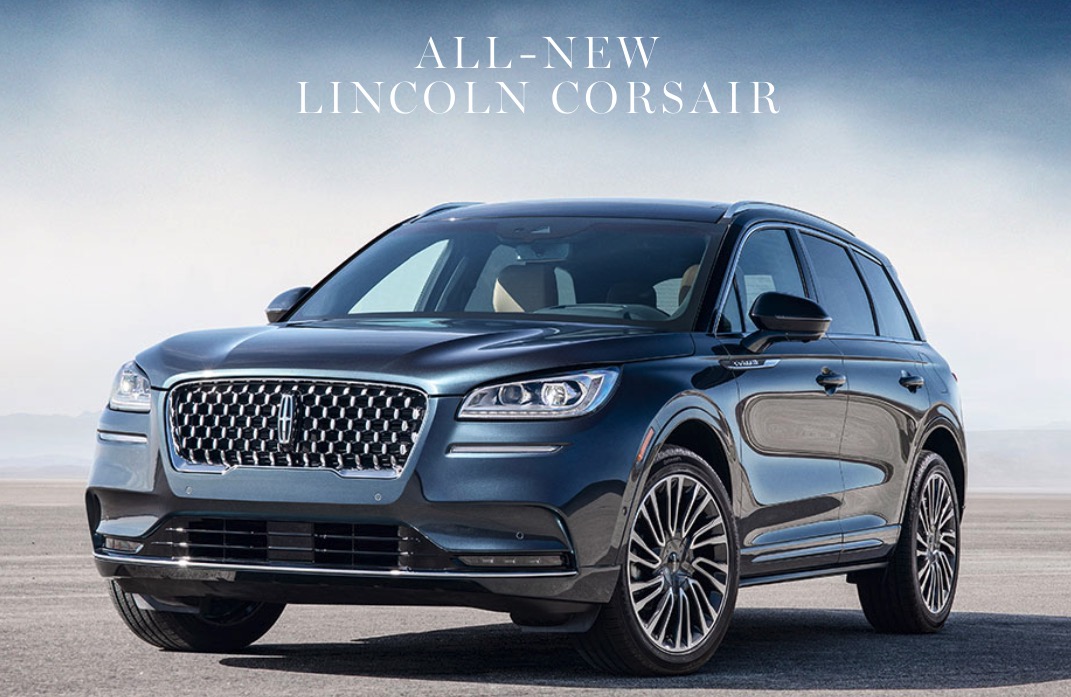
SUVs that go small in size but big on luxury are one of the hottest segments of the automotive world right now, and Lincoln is here to show the rest how it’s done with the beautiful, all-new 2020 Lincoln Corsair. Sleek, nimble, powerful and unmistakably Lincoln, the 2020 Corsair — which debuted in April at the New York International Auto Show — features Lincoln’s craftsmanship and attention to detail in size that’s small enough to easily navigate downtown traffic while still providing legendary Lincoln comfort.
“Entering the fastest-growing luxury segment, the all-new Corsair is artistically crafted, expertly designed and infused with our unwavering attention and commitment to detail; it’s unapologetically Lincoln,” says Joy Falotico, president, The Lincoln Motor Company. “Corsair’s addition to the portfolio means Lincoln now has a full family of SUVs to exceed the needs of our luxury clients.”
The 2020 Lincoln Corsair slots into Lincoln’s lineup just below the full-size Lincoln Navigator and the midsize, three-row Lincoln Aviator. There’s more than a little family resemblance between those models and the Corsair as well, starting up front with a grille of tasteful chrome mesh than emulates the classic Lincoln crest, flowing back into elegant, winglike headlights and crisp and tasteful body lines and a gracefully arched roofline ending in an integrated spoiler. The result is sculpture in motion.
Inside the 2020 Lincoln Corsair, comfort, silence and carefully-curated materials are the rule. To ensure your 2020 Corsair is a quiet oasis from the world outside, engineers developed a unique dual-wall firewall and dashboard, creating an sound-insulating space that muffles almost all engine, transmission and drivetrain noise while also reducing annoying vibrations. Active Noise Control, which monitors for unwelcome sound and issues sound from the speakers to cancel it out, is also standard on the Corsair. Horizontal interior design makes the most of space, while giving a sleek and modern look, with features like the cantilevered center console, butter-soft leather and real wood and hand-polished alloy trim. Fill that space the way you want, thanks to a 14-speaker premium audio system by Revel.
Under the hood of the 2020 Lincoln Corsair, Lincoln’s hundred-year quest for refined and reliable power reaches new heights with a standard 2.0-liter turbo four, producing 250 horsepower and 275 lb.-ft. of torque. Need more power? Then step up to the available turbo 2.3-liter engine, with 280 horsepower and 310 lb.-ft. of torque. Both engines are backed by a remarkably smooth 8-speed automatic transmission. Further refine your drive, with signature driving modes including Normal, Excite, Slippery and the eco-friendly Conserve.
“Every piece of technology has been purposefully integrated to work with you on your journey,” says John Jraiche, Corsair chief engineer. “It’s orchestrated to make your trip effortless by providing a nimble, confident drive.”
Built at Lincoln’s cutting-edge Louisville Assembly Plant in Louisville, Kentucky, the 2020 Lincoln Corsair will be on the lot at McLarty Daniel Ford Lincoln in Bentonville this fall. Want to be one of the first in Northwest Arkansas to own this incredible compact luxury SUV from Lincoln? Then stop in today at McLarty Daniel Ford Lincoln of Bentonville, where our selection is unbeatable, and so is our commitment to customer service.
Connect with us


- September 2025
- May 2025
- March 2025
- February 2025
- September 2024
- August 2024
- July 2024
- April 2024
- March 2024
- February 2024
- October 2023
- September 2023
- July 2023
- June 2023
- May 2023
- April 2023
- June 2022
- May 2022
- March 2022
- February 2022
- January 2022
- December 2021
- November 2021
- September 2021
- August 2021
- July 2021
- June 2021
- May 2021
- April 2021
- March 2021
- February 2021
- January 2021
- December 2020
- November 2020
- October 2020
- September 2020
- August 2020
- July 2020
- June 2020
- May 2020
- March 2020
- February 2020
- January 2020
- December 2019
- November 2019
- October 2019
- September 2019
- August 2019
- July 2019
- June 2019
- May 2019
- April 2019
- March 2019
- February 2019
- January 2019
- December 2018
- November 2018
- October 2018
- September 2018
- August 2018
- July 2018
- June 2018
